
SUPERIOR SOLUTION
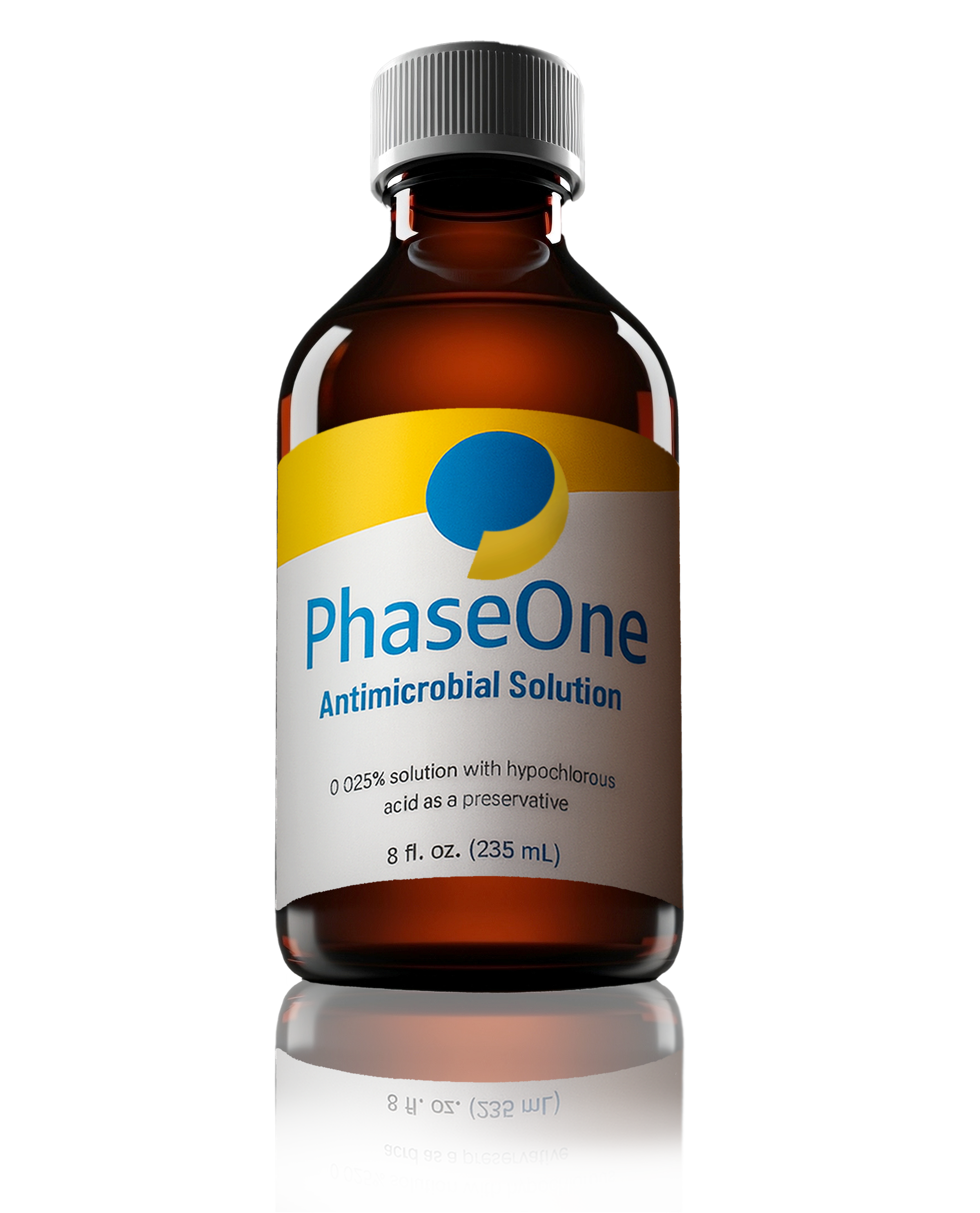
Experience PhaseOne Antimicrobial Solution as part of an overall infection control strategy against a broad range of surgical procedures.
-

No-Rinse Formula
Our no-rinse formula is efficient and easy to use.
-

Non-Cytotoxic
Hypochlorous acid (HOCl) is naturally produced as part of our immune system during phagocytosis so it’s non-cytotoxic and kind to tissue.
-

The Miracle Molecule
HOCl is 100x more effective than Dakin’s (bleach) while safe on living tissue and healing cells.
-

Medical Device
Considered a medical device by regulatory standards. Intended for use by or on the order of a licensed healthcare provider.
Surgical Site Infections Remain a Significant and Costly Complication.
SURGICAL SITE INFECTION (SSI)
THE CRITICAL PROBLEM
Surgical Site Infections (SSIs) remain unacceptably high in surgical procedures carrying significant consequences from re-operations and revisions, prolonged recovery times, unnecessary morbidity and deaths, and outsized costs to the healthcare system.
-
Studies report that the associated 5-year mortality rate of PJIs are up to 26%. The 5-year mortality rate for breast cancer is often cited at 11%.
-
Projections for the year 2030 estimate that the annual number could be around 40,000 PJI cases for total knee arthroplasties (TKA) and 26,000 for total hip arthroplasties (THA), totaling 66,000 cases for those specific joints.
-
The combined annual hospital costs related to hip and knee PJIs alone were projected to be approximately $1.8 billion by 2030.
Cost Per Patient: The cost of treating a single PJI case is much higher than an uncomplicated primary joint replacement, often five times as much. Individual case management can average around $90,000 to over $100,000. Some estimates of the lifetime economic cost of treatment for a single 65-year-old patient with an infected hip PJI can be as high as approximately $390,806.
-
There is a clear trend of increasing antibiotic-resistant pathogens in PJIs, which often necessitate revision surgeries.
-
Chemicals such as CHG and PVP-I have demonstrated detrimental effects to both articular cartilage viability and human osteoblasts.⁴ ⁵ ⁶
PHASEONE
A POWERFUL SOLUTION
PhaseOne delivers the power of pure, stable HOCl as a preservative in the bottled solution, allowing effective rinsing of dirt, debris, and microorganisms from surgical wounds.
OUR UNIQUE INFECTION INTELLIGENCE:
PhaseOne optimally supports infection control strategies - offering a solution that mechanically cleanses and removes wound debris without compromising tissue safety.
-
Hypochlorous acid (HOCl) is naturally produced as part of our immune system during phagocytosis so HOCl is non-cytotoxic and kind to tissue. When neutrophils encounter bacteria or other pathogens, the neutrophils engulf it, generate HOCl and destroy the microorganism.⁷
-
HOCl is 100x more effective than Dakin’s (bleach) and safe on living tissue and healing cells.⁷
-
PhaseOne is manufactured in an ISO-certified facility and has passed USP sterility <71> and endotoxin <85> testing, and is backed by extensive in vivo and in vitro clinical data that demonstrate the product's efficacy as part of an overall infection control strategy.
ORGANISMS TESTED – 99.9% REDUCTION IN SOLUTION IN 60 SEC⁸
INCLUDING: Staphylococcus aureus Methicillin-susceptible (MSSA) • Staphylococcus aureus Methicillin-
resistant (MRSA) • Staphylococcus epidermidis • Staphylococcus haemolyticus • Staphylococcus hominis
• Staphylococcus saprophyticus • Streptococcus pyogenes • Corynebacterium amycolatum • Enterococcus
faecium • Bacillus oleronius • Clostridium perfringens • Propionibacterium acnes • Acinetobacter baumannii
• Escherichia coli • Enterobacter aerogenes • Haemophilus influenzae • Klebsiella pneumoniae • Proteus
mirabilis • Pseudomonas aeruginosa • Serratia marcescens • Vibrio vulnificus • Bacteroides fragilis
• Candida albicans • Aspergillus brasiliensis
“I USE IT ON EVERY CASE BECAUSE IT JUST WORKS.”
- M.Christie, MD, Orthopedic Surgeon
REFERENCES
1. Ramos, M.S., et al. 2025. J. Arthroplasty. PubMed PMID: 40311946.
2. AJRR. 2025. The 12th Annual Report of the AJRR on Hip and Knee Arthroplasty. https://connect.registryapps.net/download-the-ajrr-2025-annual-report?
3. Premkumar, A., et al. 2021. J Arthroplasty. PubMed PMID: 33422392.
4. Moslehyazdi M, Bielajew B, Schlechter J, Athanasiou K, Wang D. Detrimental effects of chlorhexidine on articular cartilage viability, matrix, and mechanics. Orthop J Sports Med. 2023;11(7)(suppl 3)
5. Gaur G, Predtechenskaya M, Voyich JM, et al. Assessing the effects of surgical irrigation solutions on human neutrophil interactions with nascent Staphylococcus aureus biofilms. Microorganisms. 2024;12(10):1951.
6. Sosnoski D, Dietz P, Bou-akl T, Ren W-P, Markel D. Irrigation solutions negatively affect the viability and function of human fibroblasts: An in vitro study. Biomed Hub. 2022;7:165-172.
7. Schwartz, J., 2025. Sci Amer. PubMed PMID: 40232971.
8. Brindle, C.T., et al. 2018. Aesthet Surg J. PubMed PMID: 29240873.
*Data on file.
**This information is provided for general scientific context about hypochlorous acid. It is not intended to describe or imply the performance or approved indications of PhaseOne or any specific product.